Category: Dog Care

  • 7 Easy Brain Games for Dogs You Can Try at Home

    7 Easy Brain Games for Dogs You Can Try at Home

    Ever look at your dog and wonder how they can have a basket full of toys, a comfy bed, and plenty of attention — and still act like there’s absolutely nothing to do? Dogs get bored, too. And sometimes, alongside walks and playtime, they need a chance to use their brains.

    The good news? You don’t need expensive equipment. Some of the best brain games for dogs use things you probably already have at home.

    Why Mental Stimulation Matters for Dogs

    Enrichment lets dogs investigate, solve problems, use their sense of smell, and learn. It may help with some boredom-related behaviors, but it’s not a substitute for exercise, companionship, or professional help with serious behavior concerns.

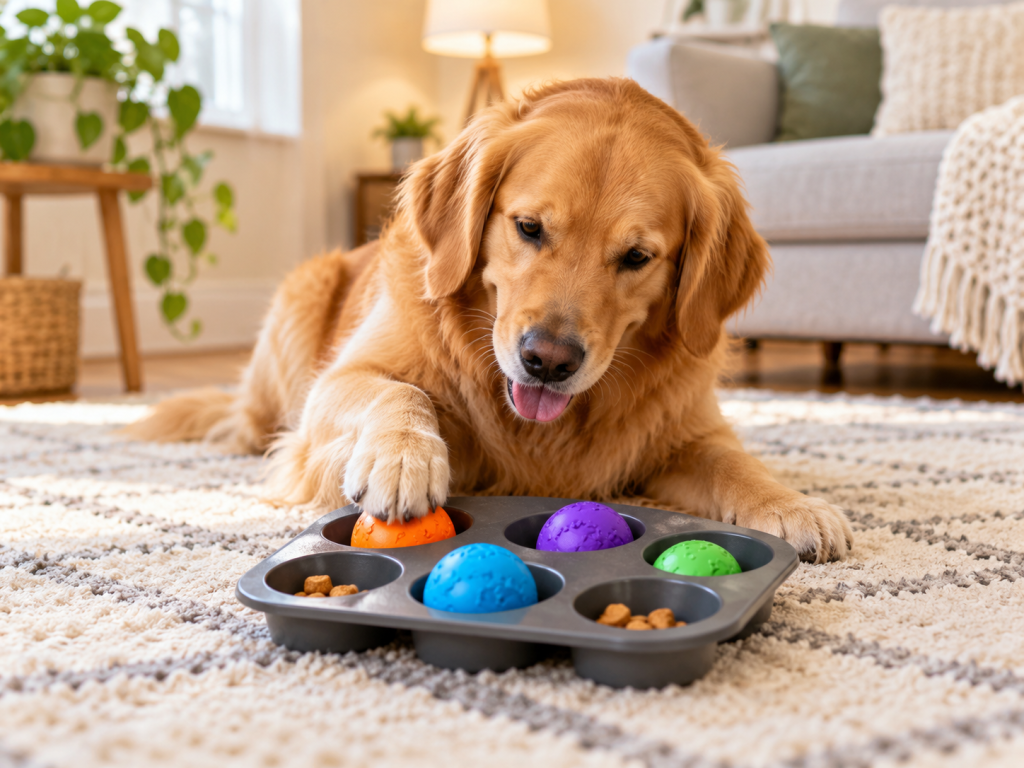
    1. The Muffin Tin Treat Puzzle

    Place a few small treats in a muffin tin and cover the compartments with dog-safe, appropriately sized toys or balls. Let your dog work out how to uncover them. Begin with just one or two covered compartments and supervise closely. Avoid anything your dog could swallow.

    2. Hide-and-Seek With Treats

    Start by placing a treat somewhere easy while your dog watches. Say “Find it!” and encourage the search. Once your dog understands, try hiding treats behind furniture or elsewhere in a safe room. Make it easy enough to feel successful.

    3. The Which-Hand Game

    Put a treat in one hand, close both fists, and let your dog sniff. When they investigate the correct hand, open it and reward them. If they choose the other hand, simply let them try again.

    4. Teach a New Trick

    Try teaching a spin, a hand target, or putting a toy in a basket. Reward small steps toward the behavior you want, keep sessions short, and end while your dog is still enjoying themselves.

    5. Make Mealtime a Puzzle

    Try spreading kibble across a snuffle mat (a fabric enrichment mat that encourages dogs to sniff out their food) or using a food-dispensing puzzle toy. Your dog gets to sniff, nudge, and think while eating. Use part of their regular food allowance rather than adding extra treats.

    6. Play the Toy Name Game

    Pick a favorite toy and consistently call it by one simple name. Say the name, invite your dog to interact with it, and reward their effort. Later, try placing it next to a second toy to see whether your dog recognizes the name.

    7. Create a Living Room Treasure Hunt

    Hide a few treats or favorite toys in safe, easy-to-reach spots around the room. Encourage your dog to search. Increase the challenge gradually and keep the space free of hazards.

    Want More Structured Brain Games for Your Dog?

    If your dog enjoys these activities, you might like a more organized collection of games. One option to explore is Brain Training for Dogs, an online training program by Adrienne Farricelli. The seller describes 21 games and reward-based exercises designed to make training interactive.

    We haven’t personally tested the complete course, so we can’t promise particular results. Review the curriculum and sales terms to decide whether it suits your dog.

    Affiliate disclosure: This article contains an affiliate link. If you purchase through it, Pet Peace Plans may earn a commission at no additional cost to you.

    Explore Brain Training for Dogs (paid affiliate link)

    Remember, Every Dog Is Different

    Some dogs love food puzzles; others love sniffing games. Notice what your dog enjoys, adjust the difficulty, and never force an activity that causes distress. If your dog has persistent anxiety, aggression, or a sudden behavior change, consult your veterinarian or a qualified behavior professional.

    Even a few enjoyable minutes together can make your dog’s day more interesting. Sometimes the best part isn’t the game — it’s doing it together.
  • How to Track Your Reactive Dog’s Triggers and Progress

    How to Track Your Reactive Dog’s Triggers and Progress

    Living with a reactive dog can make everyday walks, visitors, car rides, and even quiet moments feel unpredictable.

    One day your dog may pass another dog without much trouble. The next day, the same situation can lead to barking, lunging, freezing, or trying to get away.

    Keeping a simple record of what happened can help you notice patterns that are hard to see in the moment.

    The goal is not to label your dog or figure out the cause on your own. It is to keep track of triggers, reactions, recovery, and progress so you have clearer information to work with over time.

    What Should You Track?

    A useful reactivity log does not need to be complicated.

    For each incident, try to record what the trigger was, how close it was, what your dog did, how intense the reaction seemed, and how long it took your dog to settle afterward.

    It can also help to note where you were, what time of day it was, whether your dog had already had a stressful day, and anything else that may have affected the situation.

    Over time, those details can help you see patterns that are easy to miss when you are focused on getting through the moment.

    Identify the Trigger

    Start by writing down what seemed to set off the reaction.

    Common triggers can include other dogs, unfamiliar people, bicycles, runners, loud noises, visitors, certain locations, or being surprised at close range.

    Be as specific as you can. Instead of writing “dog,” you might note “large dog across the street” or “small dog passing within a few feet.”

    You do not need to decide why your dog reacted. The goal is simply to describe the situation clearly enough that you can compare it with future incidents.

    Record Distance and Reaction Intensity

    Distance can make a big difference in how strongly a dog reacts.

    Write down approximately how far away the trigger was when your dog first noticed it and how intense the reaction became.

    You can keep the rating simple. For example, you might use a 1–5 scale, where 1 means your dog noticed the trigger but stayed calm and 5 means the reaction was very strong and difficult to interrupt.

    The goal is not to judge your dog. It is to create a consistent way to compare one situation with another and notice whether certain distances are easier for your dog to handle.

    Track How Long It Takes Your Dog to Recover

    What happens after the trigger passes can be just as useful to track as the reaction itself.

    Write down how long it takes your dog to settle, respond to you again, take treats, continue walking, or return to their usual behavior.

    You may notice that some situations lead to quick recovery while others seem to affect your dog for much longer.

    Tracking recovery over time can help you recognize progress even when reactions have not disappeared completely.

    Notice What Else Was Happening That Day

    Your dog’s reaction may be affected by more than the trigger itself.

    Write down anything else that may have made the situation harder, such as poor sleep, an unusually busy day, multiple stressful encounters, visitors, travel, or a change in routine.

    You may start to notice that your dog handles certain triggers better on calm days and struggles more when several stressful events happen close together.

    These details can give you a fuller picture of what was happening instead of looking at each reaction by itself.

    Look for Progress, Not Perfection

    Progress with a reactive dog may not always look dramatic.

    Sometimes progress means your dog notices a trigger but reacts less intensely.

    Sometimes it means they recover faster, can stay farther under threshold, or are able to respond to you sooner than before.

    Keeping a record can help you notice those smaller changes that are easy to miss from day to day.

    The goal is not to expect a perfect response every time. It is to look for patterns that show what is becoming easier and what still needs support.

    Know When to Get Extra Help

    If your dog’s reactions are frequent, intense, getting worse, or making everyday life difficult, it may be helpful to work with a qualified professional.

    A veterinarian can help rule out medical issues that may be affecting behavior, and a qualified trainer or veterinary behavior professional can help you build a plan based on your dog’s individual needs.

    Bring your notes with you. A clear record of triggers, distance, reaction intensity, recovery time, and patterns can make those conversations more useful.

    For situations when someone else may handle your dog’s routine, a pet sitter instructions checklist can help you document care details. A pet medical binder can also keep medications, vet notes, and health records together.

    Make Reactive Dog Patterns Easier to Track

    When you’re dealing with reactivity in the moment, it can be hard to remember the details later.

    That’s why I created the Pet Peace Plans Reactive Dog Trigger & Progress Tracker — to give pet owners one organized place to record triggers, distance, reaction intensity, recovery time, patterns, and progress over time.

    Instead of trying to remember which situations went better or worse, you can keep those observations together and bring clearer information to conversations with your veterinarian or trainer.

    Small Details Can Reveal Useful Patterns

    Reactive behavior can feel unpredictable, but keeping a simple record can make it easier to see what is changing over time.

    Write down the trigger, distance, intensity of the reaction, recovery time, and anything else that may have affected the situation.

    You may start to notice patterns that help you better understand what situations are harder for your dog and where progress is happening.

    The goal is not to judge every reaction. It is to make the information easier to see and easier to use.

    Pet Peace Plans provides educational and organizational resources for pet owners. This article and our products are not veterinary or behavioral advice. If you have concerns about your dog’s behavior, safety, or health, talk with your veterinarian or a qualified behavior professional.

  • How to Keep a Dog Seizure Log: What to Write Down

    How to Keep a Dog Seizure Log: What to Write Down

    When your dog has a seizure, it can be hard to remember every detail afterward.

    How long did it last?

    What happened right before it started?

    Was your dog acting differently beforehand?

    How long did it take for your dog to seem like themselves again?

    Keeping a dog seizure log can help you record those details while they’re still fresh. That record can also give your veterinarian useful information about when seizures happen, how long they last, what they look like, and how your dog behaves before and after an episode.

    Veterinary guidance specifically recommends timing seizures, keeping a log, and recording what happened before, during, and after the event. A video can also be helpful when it’s safe to take one. Cornell University College of Veterinary Medicine also recommends timing the seizure and keeping a record of what happened.

    What Should You Record in a Dog Seizure Log?

    A useful seizure log doesn’t need to be complicated. The goal is to capture the details your veterinarian may want to review and the information that can help you recognize patterns over time.

    For each seizure, try to record the date, approximate start time, how long it lasted, what your dog was doing beforehand, what the seizure looked like, and how your dog behaved afterward.

    If you notice anything unusual before the episode — such as pacing, restlessness, staring, hiding, or acting differently than normal — write that down too.

    The more consistent your notes are, the easier it becomes to compare one episode with another.

    Time the Seizure

    If it’s safe to do so, note the time the seizure starts and how long it lasts.

    During a frightening event, even a short seizure can feel much longer than it actually is, so using a clock or phone timer can give you a more accurate record.

    Write down the duration as soon as you can afterward.

    If a seizure lasts several minutes, repeats without full recovery between episodes, or you are otherwise concerned, contact your veterinarian or an emergency veterinary clinic promptly.

    Write Down What Happened Before the Seizure

    Think back to what your dog was doing in the minutes or hours before the seizure.

    Were they sleeping, eating, playing, resting, or just waking up?

    Did you notice anything unusual, such as pacing, clinginess, hiding, staring, restlessness, or changes in behavior?

    You don’t need to decide whether something caused the seizure. Just record what you noticed. Over time, those details may help you and your veterinarian see whether any patterns are developing.

    Record What the Seizure Looked Like

    As soon as you can, write down what you remember about the seizure itself.

    Did your dog fall over, become stiff, paddle their legs, drool, vocalize, or lose control of their bladder or bowels?

    Did the movement affect the whole body or only part of the body?

    You do not need to diagnose the type of seizure yourself. The goal is simply to describe what you saw as clearly as possible.

    If it is safe, a short video can also be helpful for your veterinarian to review.

    Record What Happens After the Seizure

    After the seizure ends, your dog may not return to normal right away.

    Write down how your dog behaves during the recovery period. You may notice confusion, pacing, restlessness, temporary weakness, unusual hunger or thirst, or a need to sleep.

    Also note approximately how long it takes before your dog seems back to their usual behavior.

    These details can help your veterinarian understand the full episode, not just what happened during the seizure itself.

    Look for Patterns Over Time

    One seizure entry can be useful, but the real value of a log often comes from looking back over several episodes.

    You may start to notice patterns in timing, recovery, behavior, sleep, activity, or other circumstances surrounding the seizures.

    The goal is not to figure out the cause on your own. It is to give you a clearer record to share with your veterinarian.

    A consistent log can also make it easier to remember whether seizures are becoming more frequent, lasting longer, or changing in appearance.

    Keep Medications and Treatment Notes Together

    If your dog takes medication for seizures or another condition, it can help to keep those details with the seizure log.

    Record the medication name, the time it was given, and any instructions your veterinarian has asked you to follow.

    If your veterinarian changes a dose or treatment plan, note the date of that change so you can compare it with later seizure entries.

    Never change, skip, or stop a prescribed medication without speaking with your veterinarian first.

    It can also help to keep your dog’s emergency details and medical records easy to grab. See what to include on a pet emergency information sheet and what records to keep in a pet medical binder.

    You Don’t Have to Keep All of This in Your Head

    When seizures are happening over time, it can be difficult to remember the details of each episode accurately.

    That’s why I created the Pet Peace Plans Dog Seizure & Epilepsy Care Tracker — to give pet owners one organized place to record seizure dates, duration, what happened before and after, medications, recovery notes, and other details they may want to discuss with their veterinarian.

    Instead of trying to piece everything together from memory, phone notes, and calendar entries, you can keep the information together in one place.

    Know When a Seizure Is an Emergency

    A seizure lasting more than five minutes is considered a medical emergency. Multiple seizures within a short period can also require immediate veterinary attention.

    According to the Cornell University College of Veterinary Medicine, dogs experiencing a seizure lasting more than five minutes or multiple seizures in a short period should be taken to an emergency veterinarian right away.

    If your dog experiences a first-time seizure, Cornell also recommends arranging a veterinary examination after your dog has recovered.

    A Good Record Can Make the Next Conversation Easier

    You may not be able to predict when a seizure will happen, but you can make it easier to remember what happened afterward.

    Write down the date, time, duration, what you noticed before the seizure, what happened during it, and how your dog recovered.

    Over time, that record can give you and your veterinarian a clearer picture than memory alone.

    Sometimes a little organization can make a stressful situation feel more manageable.

    Pet Peace Plans provides educational and organizational resources for pet owners. This article and our products are not veterinary advice and are not intended to diagnose, treat, cure, or prevent disease. Always talk with your veterinarian about your dog’s individual health, seizures, medications, and treatment.