Ever look at your dog and wonder how they can have a basket full of toys, a comfy bed, and plenty of attention — and still act like there’s absolutely nothing to do? Dogs get bored, too. And sometimes, alongside walks and playtime, they need a chance to use their brains.
The good news? You don’t need expensive equipment. Some of the best brain games for dogs use things you probably already have at home.
Why Mental Stimulation Matters for Dogs
Enrichment lets dogs investigate, solve problems, use their sense of smell, and learn. It may help with some boredom-related behaviors, but it’s not a substitute for exercise, companionship, or professional help with serious behavior concerns.
1. The Muffin Tin Treat Puzzle
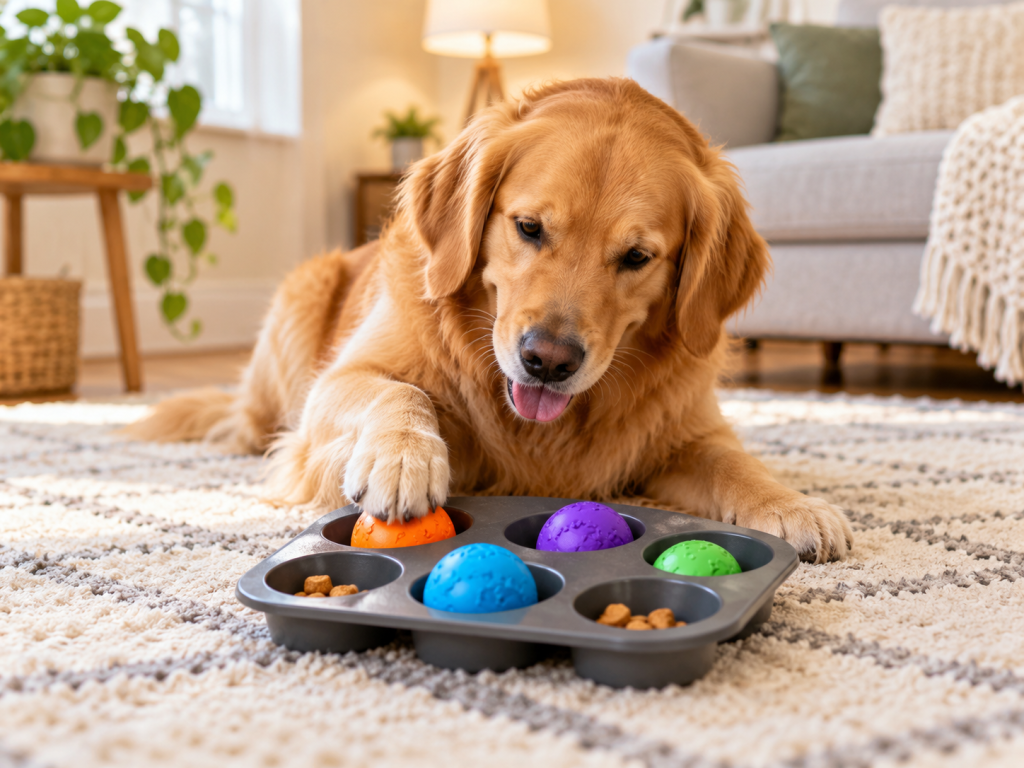
Place a few small treats in a muffin tin and cover the compartments with dog-safe, appropriately sized toys or balls. Let your dog work out how to uncover them. Begin with just one or two covered compartments and supervise closely. Avoid anything your dog could swallow.
2. Hide-and-Seek With Treats
Start by placing a treat somewhere easy while your dog watches. Say “Find it!” and encourage the search. Once your dog understands, try hiding treats behind furniture or elsewhere in a safe room. Make it easy enough to feel successful.
3. The Which-Hand Game
Put a treat in one hand, close both fists, and let your dog sniff. When they investigate the correct hand, open it and reward them. If they choose the other hand, simply let them try again.
4. Teach a New Trick
Try teaching a spin, a hand target, or putting a toy in a basket. Reward small steps toward the behavior you want, keep sessions short, and end while your dog is still enjoying themselves.
5. Make Mealtime a Puzzle
Try spreading kibble across a snuffle mat (a fabric enrichment mat that encourages dogs to sniff out their food) or using a food-dispensing puzzle toy. Your dog gets to sniff, nudge, and think while eating. Use part of their regular food allowance rather than adding extra treats.
6. Play the Toy Name Game
Pick a favorite toy and consistently call it by one simple name. Say the name, invite your dog to interact with it, and reward their effort. Later, try placing it next to a second toy to see whether your dog recognizes the name.
7. Create a Living Room Treasure Hunt
Hide a few treats or favorite toys in safe, easy-to-reach spots around the room. Encourage your dog to search. Increase the challenge gradually and keep the space free of hazards.
Want More Structured Brain Games for Your Dog?
If your dog enjoys these activities, you might like a more organized collection of games. One option to explore is Brain Training for Dogs, an online training program by Adrienne Farricelli. The seller describes 21 games and reward-based exercises designed to make training interactive.
We haven’t personally tested the complete course, so we can’t promise particular results. Review the curriculum and sales terms to decide whether it suits your dog.
Affiliate disclosure: This article contains an affiliate link. If you purchase through it, Pet Peace Plans may earn a commission at no additional cost to you.
Explore Brain Training for Dogs (paid affiliate link)
Remember, Every Dog Is Different
Some dogs love food puzzles; others love sniffing games. Notice what your dog enjoys, adjust the difficulty, and never force an activity that causes distress. If your dog has persistent anxiety, aggression, or a sudden behavior change, consult your veterinarian or a qualified behavior professional.
Even a few enjoyable minutes together can make your dog’s day more interesting. Sometimes the best part isn’t the game — it’s doing it together.