October is National Animal Safety and Protection Month, a reminder to look at the everyday things that help keep the animals in our lives safer. It does not have to mean buying a cabinet full of emergency supplies or turning your house upside down. Most pet safety comes down to knowing where important information is, noticing changes early, and having a plan before something goes wrong.
For pet owners, that can be as simple as checking an ID tag, updating a medication list, or making sure the person caring for your pet knows who to call in an emergency.
Start With the Safety Basics You Use Every Day
Some of the most useful safety steps are also the easiest to overlook because they are part of everyday life. Walk through your home with your pet in mind. Are medications, cleaners, cords, small objects, and foods your pet should not have kept out of reach? Are gates, screens, fences, carriers, and leashes still secure and in good condition?
If your pet wears a collar, check that the identification information is current and readable. If your pet is microchipped, make sure the registration still has your current phone number and address. Identification only helps when the information connected to it is up to date.
Keep Emergency Information Somewhere Easy to Find
During an emergency, nobody wants to search through old emails, drawers, and appointment paperwork for a veterinarian’s phone number or a medication name.
A simple emergency information sheet can keep the basics together: your pet’s name, veterinarian, emergency clinic, medications, allergies, medical conditions, and a backup contact. Our guide on what to include on a pet emergency information sheet walks through the information worth keeping in one place.
If you want a ready-to-use version, Pet Peace Plans also has a free pet emergency information sheet you can download and keep with your pet’s records.
Make a Plan for the Unexpected
Emergencies are stressful partly because they force us to make a lot of decisions quickly. A little planning ahead can remove some of those decisions.
- Know which emergency veterinary clinic you would use after normal office hours.
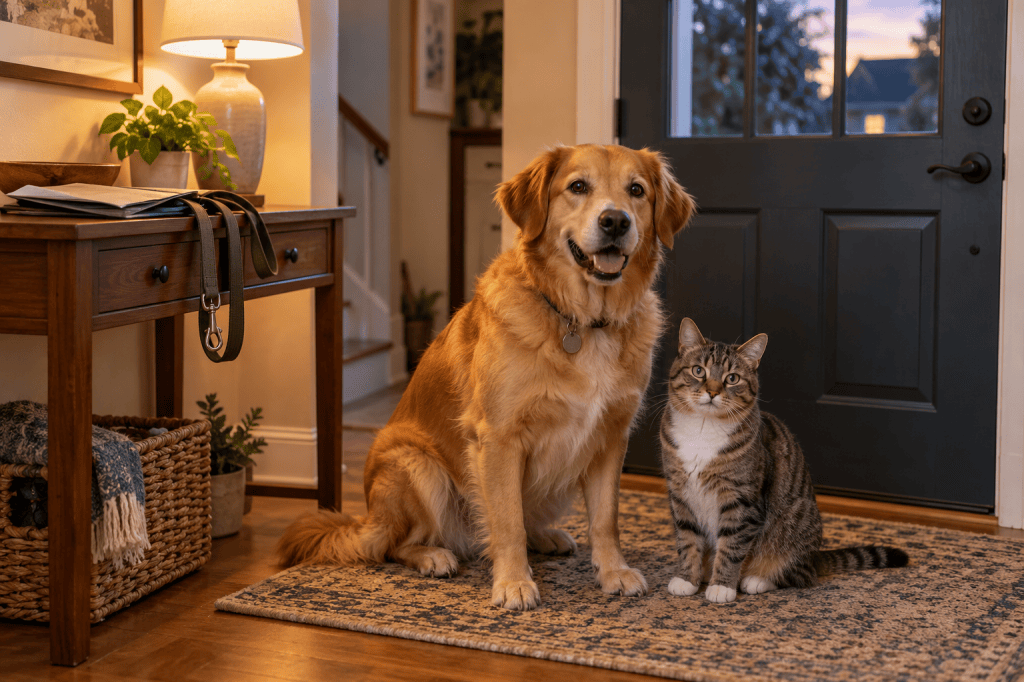
- Keep a carrier, leash, or other safe transport option where you can reach it quickly.
- Decide who could care for your pet if you were unexpectedly unable to get home.
- Keep a recent photo of your pet available.
- Know where medications and important records would go if you needed to leave home quickly.
You do not need an elaborate disaster plan to start. A simple, realistic plan that everyone in the household understands is much more useful than a complicated one nobody can remember.
Keep Medications and Health Records Organized
Pet safety also means being able to give accurate information when your veterinarian asks for it. Keep an updated medication list, vaccination information, recent test results, allergies, and important medical history together.
If your pet has an ongoing condition, a daily log can make it easier to notice changes in appetite, weight, behavior, bathroom habits, symptoms, or medication routines. You do not have to rely on memory when you have written information to look back on.
If your records are scattered in several places, our pet medical binder guide explains which records are useful to keep together.
Make Sure a Pet Sitter Knows More Than the Feeding Schedule
If someone else cares for your pet, safety information should be part of the handoff. A sitter needs the daily routine, but they should also know about medications, behavior concerns, escape risks, emergency contacts, veterinary information, and what you want them to do if something seems wrong.
Writing this down is easier than trying to explain everything while you are heading out the door. The Pet Sitter Instructions Checklist covers the information that is easy to forget until someone needs it.
Pay Attention to Changes in Your Pet
You know what is normal for your pet better than anyone. A change in eating, drinking, movement, sleep, bathroom habits, energy, or behavior may be worth writing down, especially if it continues or happens along with other changes.
Tracking does not replace veterinary care, and a log cannot tell you what is causing a change. What it can do is give you clearer information to share with your veterinarian. If you think your pet is sick, injured, or experiencing an emergency, contact a veterinarian or emergency veterinary clinic.
Do a Quick Pet Safety Check This October
National Animal Safety and Protection Month is a good excuse to spend 15 or 20 minutes checking the things we usually assume are already handled.
- Is your pet’s ID information current?
- Do you know where you would go for an after-hours veterinary emergency?
- Are medications and health records easy to find?
- Does a backup caregiver know your pet’s routine and important safety information?
- Are household hazards stored securely?
- Could you grab the information and supplies your pet needs quickly if you had to leave home?
You do not need to prepare for every possible situation. The goal is simply to make the most important information easier to find and the most likely problems a little easier to handle.
Prepared Does Not Have to Mean Complicated
Pet safety is usually built from small habits: keeping records current, storing hazards carefully, noticing changes, and making sure someone else could step in if needed.
National Animal Safety and Protection Month is a useful reminder to check those basics. A few minutes of organization now can make a stressful situation easier later—and help you spend less time searching for information when your pet needs your attention most.