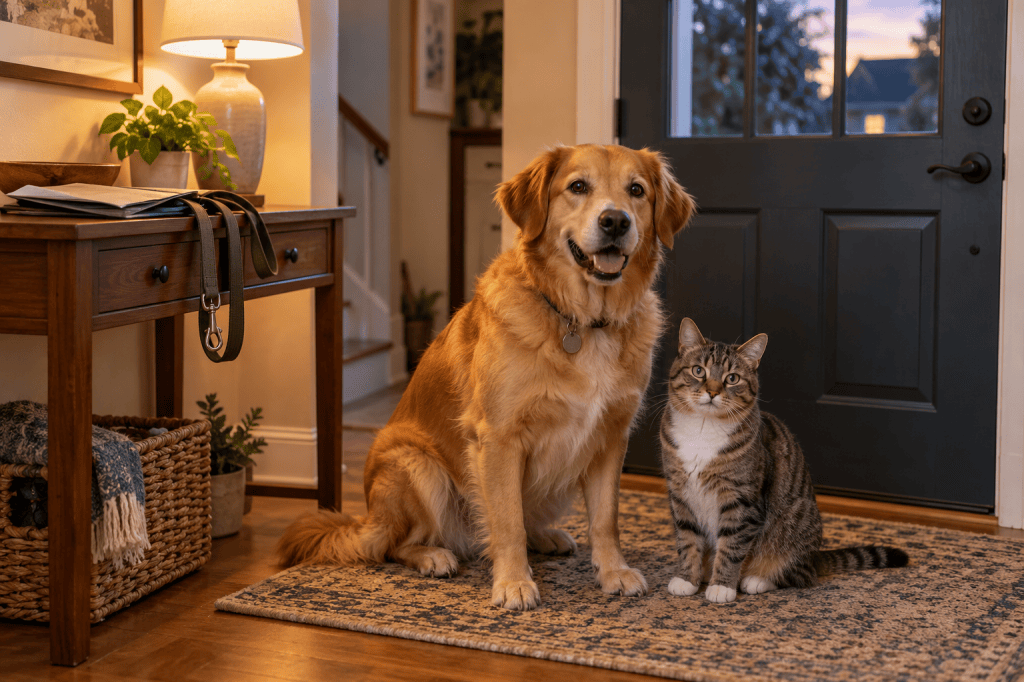
Leaving your pet with a sitter can be stressful — especially when you’re trying to explain everything at the last minute.
What time do they eat?
Where is the medication?
Which door sticks?
What happens if they refuse breakfast?
Who should the sitter call if something goes wrong?
A clear set of pet sitter instructions can make the handoff much easier for everyone.
The goal is not to write a novel. It is to give your sitter the practical information they need to care for your pet confidently and know what to do if something unexpected happens.
Start With the Basics
Start with the information your sitter will need right away.
Include your pet’s name, age, feeding schedule, normal routine, where supplies are kept, and anything your sitter should know about your home.
If your pet has a favorite hiding spot, a habit of slipping through a certain door, or a routine that helps them settle, write that down too.
The more practical the information is, the easier it will be for your sitter to step into your pet’s normal routine without having to guess.
Write Down the Feeding Routine
Write down exactly what your pet eats, how much they get, and when they are normally fed.
Include where the food is stored, whether treats are allowed, and anything your sitter should avoid giving.
If your pet is picky, eats slowly, needs food mixed a certain way, or has a routine that helps them eat, include that too.
A simple feeding schedule can prevent confusion and help your sitter keep your pet’s routine as normal as possible.
List Medications and Special Care Instructions
If your pet takes medication, write down the name, amount, timing, and exactly how it should be given.
Include where the medication is stored and any special instructions your veterinarian has given you.
If your pet has allergies, medical conditions, mobility needs, or other care requirements, list those clearly too.
Do not rely on memory or assume your sitter will know what to do. Clear written instructions can make an important difference if your pet needs special care while you are away.
Include Emergency Contacts and Vet Information
Make sure your sitter knows exactly who to contact if something goes wrong.
Include your regular veterinarian’s name and phone number, the nearest emergency veterinary clinic, and at least one backup contact who can make decisions if you cannot be reached.
It is also helpful to write down where your pet’s carrier, leash, medication list, and important records are kept.
The goal is to make sure your sitter is not searching for information during a stressful situation.
Explain the Daily Routine
Write down the parts of your pet’s normal day that help them feel comfortable and settled.
Include things like walk times, potty breaks, playtime, bedtime routines, favorite toys, sleeping spots, and any household rules your sitter should follow.
If your pet gets anxious when left alone, reacts to certain noises, or has a habit your sitter should expect, include that too.
The goal is not to control every minute of the day. It is to give your sitter enough information to keep your pet’s routine familiar while you are away.
Tell Your Sitter What to Do if Something Seems Wrong
Your sitter should know what changes or situations you want them to take seriously.
Write down anything they should watch for, such as refusing food, repeated vomiting, unusual weakness, difficulty breathing, changes in bathroom habits, or behavior that is very different from normal.
Be clear about who they should contact first and what you want them to do if they cannot reach you.
If your pet has a known medical condition, include any specific instructions your veterinarian has already given you for situations that may come up.
Don’t Forget the Little Household Details
Some of the most useful pet sitter instructions have nothing to do with food or medication.
Write down details like which doors should stay closed, where cleaning supplies are kept, what to do with mail or packages, whether your pet is allowed on furniture, and anything unusual about locks, alarms, gates, or the yard.
If your pet has a favorite hiding place or a habit of sneaking into a certain room, include that too.
Small details like these can prevent confusion and make the stay much easier for your sitter.
Before you leave, it can help to prepare a pet emergency information sheet and keep important medical records together in a pet medical binder so your sitter knows where to look if something comes up.
Make Pet Sitting Easier to Hand Off
When you’re getting ready to leave town, it’s easy to realize how much pet-care information normally lives in your head.
That’s why I created the Pet Peace Plans Boarding & Pet Sitter Planner — to give pet owners one organized place to keep feeding instructions, medications, emergency contacts, routines, household notes, and other important care details.
Instead of writing a last-minute note or sending multiple text messages, you can leave your sitter with clear information in one place.
A Little Preparation Can Make Leaving Easier
Leaving your pet with someone else can feel a lot less stressful when the important details are already written down.
You don’t need to create pages of complicated instructions. Focus on the information your sitter is most likely to need, keep it easy to find, and update it whenever your pet’s routine or care changes.
A clear plan gives your sitter more confidence and gives you one less thing to worry about while you’re away.
Pet Peace Plans provides educational and organizational resources for pet owners. This article and our products are not veterinary advice. If you have questions about your pet’s health, medications, or medical needs, talk with your veterinarian.