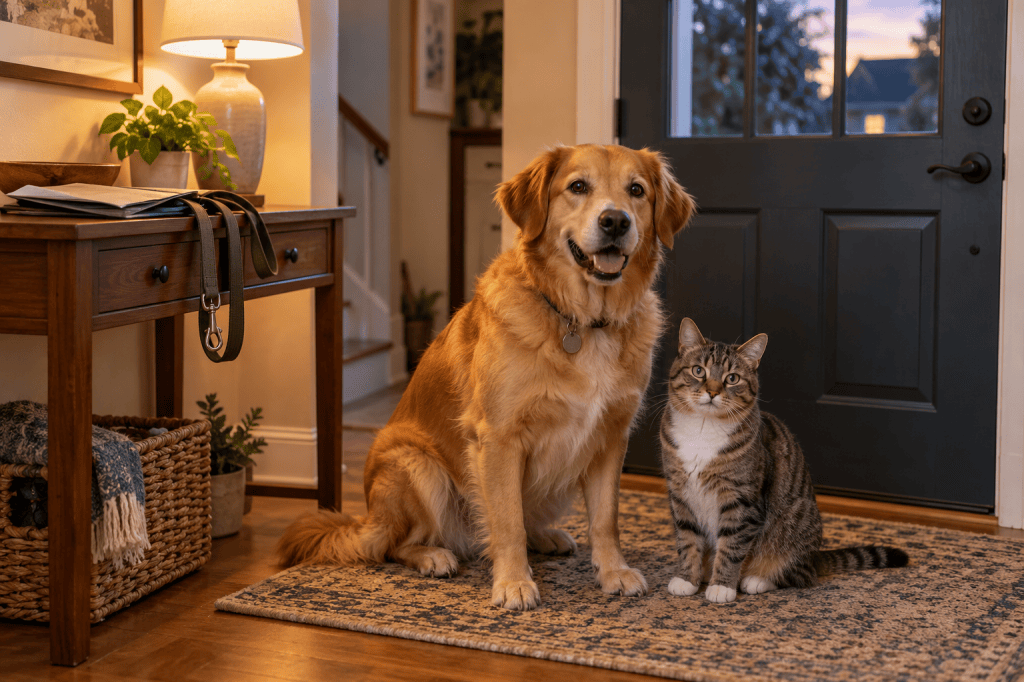
You leave home expecting to be back before dinner. Then your car breaks down. A flight gets canceled. Someone you love needs you at the hospital, and a quick visit turns into an overnight stay.
Meanwhile, your dog is waiting for a walk. Your cat’s dinner is still in the cupboard. And the person who would happily help has no idea where you keep the spare key.
A pet emergency care plan gives a trusted person a way to step in if you cannot get home. It can be as simple as a named backup caregiver, a secure way into your home, and a short set of care instructions.
You don’t have to finish a whole binder tonight. Start by answering one question: Who would check on my pet if I couldn’t?
Choose a backup caregiver—and ask them first
Having someone in mind is a useful start. Having their agreement is what turns that idea into a plan.
Choose someone who can realistically reach your home and feels comfortable with your pets. Your closest relative may live an hour away. A nearby friend might be a better person to handle the first visit, with family taking over if you need more help.
Be honest about what the job involves. A friendly cat who needs dinner is a different responsibility from a large dog who is difficult to walk or a pet who needs skilled medication care.
Try asking: “If I ever got stuck away from home, would you be comfortable checking on the pets? I’d show you where everything is and leave instructions.”
If possible, agree on a second person too. Your first choice may be working, traveling, or dealing with the same local disruption.
For wider emergencies, the CDC recommends a buddy system with a trusted neighbor who can check on pets when you are away.
Decide how your backup person will know they are needed
A spare key cannot tell someone you are running late. Agree on how you will activate the plan.
For an ordinary delay, that might mean a call or text followed by a clear reply confirming they can go. If they do not respond, move to your second contact instead of assuming someone is on the way.
Also consider what happens if you cannot make that call. Tell a trusted family member or emergency contact that you have pets at home and give them your caregiver’s details. A small wallet card can say that pets are at home and name the person to contact, without displaying your door code.
If you live alone, you might agree on a check-in arrangement for certain trips or situations. Choose something both people understand and can realistically follow.
Arrange safe access before you need it
Do a quick walk-through with your caregiver. Let them try the key or temporary access code while you are there. Show them which door to use and how to keep pets from slipping out.
Share alarm instructions privately. Keep keys and access codes secure, and avoid putting them on publicly visible notices or social posts.
Renting or living in a building with controlled entry? Check how an authorized helper can get in. A working apartment key may be little use if they cannot pass the building entrance.
Write a “first visit” care sheet
Imagine your helper arriving after work, with a phone full of messages and a hungry pet at their feet. What do they need to know in the next ten minutes?
- Who is here: each pet’s name and a photo, especially if they look alike.
- Food and water: what to serve, the measured amount, timing, and where supplies are kept.
- Bathroom needs: the next walk or potty break, or where to find the litter box and scoop.
- Important handling notes: escape risks, hiding places, pets that need separate feeding, and anything your helper should avoid.
- Essential equipment: where to find a leash, harness, carrier, and cleaning supplies.
Use plain directions. “Half a level cup from the labeled container at 6 p.m.” is easier to follow than “Give him his usual dinner.” Add a date so your helper can tell whether the instructions are current.
For a more detailed handoff, use our pet sitter instructions checklist.
Make medication and veterinary information easy to find
If your pet needs medication, leave the current veterinary instructions and labeled medication together. Arrange a demonstration beforehand if your helper needs to learn how to give it. Make sure they are willing and able to do the task.
Use a shared record of doses actually given, including the time and caregiver’s name. If instructions are unclear or your helper cannot confirm whether a dose was given, they should contact the veterinarian rather than guess.
Include your regular vet and an emergency clinic’s phone number and address. Ask your clinic in advance what authorization and payment arrangements it requires if someone else brings your pet in while you are unreachable.
Our guide to creating a pet emergency information sheet can help you organize those details. The American Animal Hospital Association’s sitter guidance also emphasizes written care instructions and emergency contacts.
Think beyond the first evening
One visit may cover a late train. An unexpected overnight stay needs another plan.
Talk through who can return in the morning, whether your caregiver can stay overnight, and where your pet could go if care at home is not possible. If boarding might be needed, check the facility’s requirements ahead of time.
For pets with complex care needs, ask your veterinarian about suitable backup care options before a problem arises. Keep the carrier or leash easy to locate if transport becomes necessary.
Keep the plan somewhere your helper can find it
Give your caregiver a copy and keep another in an agreed place at home. A digital copy is useful, but a printed version helps if a phone is flat or the internet is down.
If you prefer ready-made pages, our Boarding & Pet Sitter Planner on Etsy gives you space to organize feeding instructions, routines, medications, and emergency contacts. It’s a Pet Peace Plans digital download you can prepare ahead of time and share with your caregiver. A notebook or a simple document works too.
Review the plan whenever medication, food, contact details, or home access changes. Give it another quick check before you travel.
Three things you can do tonight
- Ask one trusted person whether they can be your backup pet caregiver.
- Agree on a secure way for them to enter your home.
- Write down the next meal, bathroom needs, essential care instructions, and vet contacts.
Your dog will still expect that evening walk. Your cat will still have opinions about dinner being late. Giving someone the information and access to help means their familiar care can continue, even when your day takes an unexpected turn.