A peaceful walk can change in a moment. Your dog spots another dog across the street, a jogger comes around the corner, or a bicycle rolls by—and suddenly the leash is tight and your dog is barking, lunging, or struggling to focus.
If that sounds familiar, you’re not alone. Leash reactivity is stressful for dogs and people, but it doesn’t mean your dog is “bad” or that you’ve failed. It’s a sign that something in that moment feels exciting, scary, frustrating, or overwhelming. With thoughtful management and gradual, reward-based practice, you can help your dog feel safer and make walks easier over time.
What leash reactivity can look like
Leash reactivity is a strong response to something a dog sees or hears while on leash. Common triggers include other dogs, unfamiliar people, bikes, scooters, wildlife, or loud vehicles. A dog may bark, growl, pull, freeze, hide behind you, or try to rush toward or away from the trigger.
The behavior alone doesn’t tell you exactly what your dog is feeling. Some dogs react because they’re worried; others are frustrated because they want to get closer. A veterinarian or qualified behavior professional can help you understand what may be behind your dog’s response, especially if it started suddenly or is getting more intense.
Start by making walks feel safer
Training is easier when your dog isn’t repeatedly pushed into situations they can’t handle. For now, choose quieter routes and times, cross the street when you see a trigger, or turn down a side path before your dog becomes overwhelmed. It’s perfectly fine to create more space. Distance is a useful tool, not a setback.
Watch your dog’s body language. If they can notice a trigger and still take treats, respond to you, and move with a relatively loose body, you may be far enough away to practice. If they’re barking, lunging, stiff, or unable to eat, increase the distance and help them settle before trying again.
Keep your leash secure and your handling calm. Avoid leash jerks, yelling, or forcing your dog to stay close to a trigger. Punishment can add more stress to an already difficult moment. Reward-based training and good management give your dog a clearer, safer way to learn.
Practice at a comfortable distance
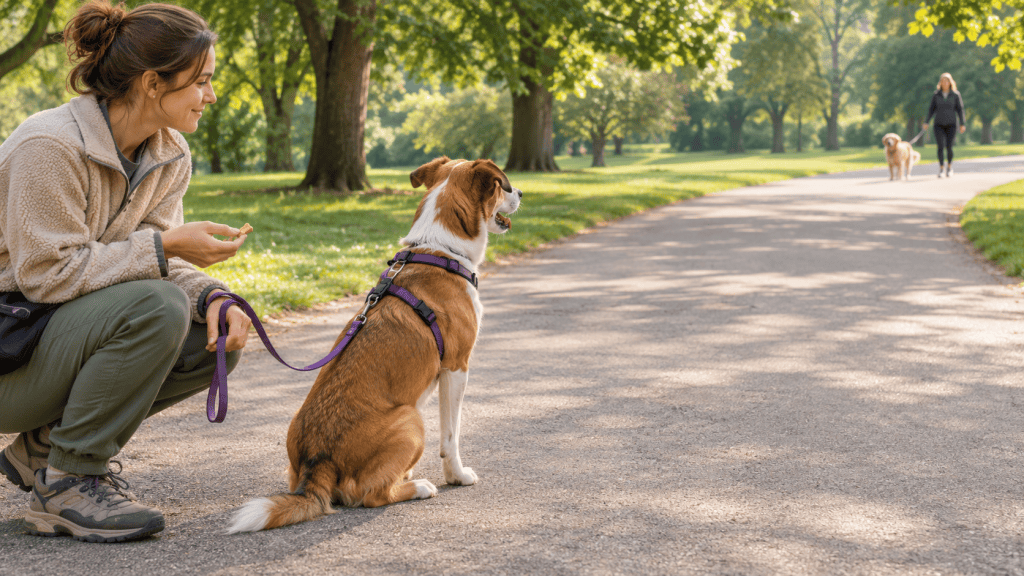
Gradual exposure paired with something your dog enjoys can help change how a trigger feels. The key is to begin at a distance where your dog can stay relaxed enough to learn. This is sometimes called working “below threshold”—in everyday terms, it means the trigger is noticeable, but not so close or intense that your dog is overwhelmed.
Try a simple routine:
- Find a manageable distance. Choose a place where your dog can see a trigger from far enough away to remain calm.
- Mark the moment your dog notices it. You can say “yes” in a quiet, cheerful voice.
- Offer a small, high-value treat. When the trigger appears, good things arrive. Let your dog look, then return their attention to you if they’re ready.
- Keep it brief. A few calm repetitions are more useful than staying until your dog is tired or upset.
- End or add distance at the first signs of stress. If your dog stops taking treats, stiffens, barks, or pulls hard, move away. Next time, begin farther from the trigger.
As your dog gets comfortable over multiple sessions, you can make the exercise just a little more challenging—perhaps by practicing at a slightly closer distance. Progress may be gradual, and that’s normal. Moving too quickly can make the trigger feel more alarming instead of less.
Give your dog an easy way to move away
It helps to practice a few simple skills at home or in quiet places before you need them on a busy walk. Teach your dog to turn with you when you say “this way,” touch their nose to your hand, or find a treat scattered on the ground. These can give you a friendly way to create space when a surprise trigger appears.
Practice first when nothing difficult is happening. Then use the skill when your dog is still calm enough to respond. If a trigger is already too close, focus on safely moving away rather than asking for a perfect sit or eye contact.
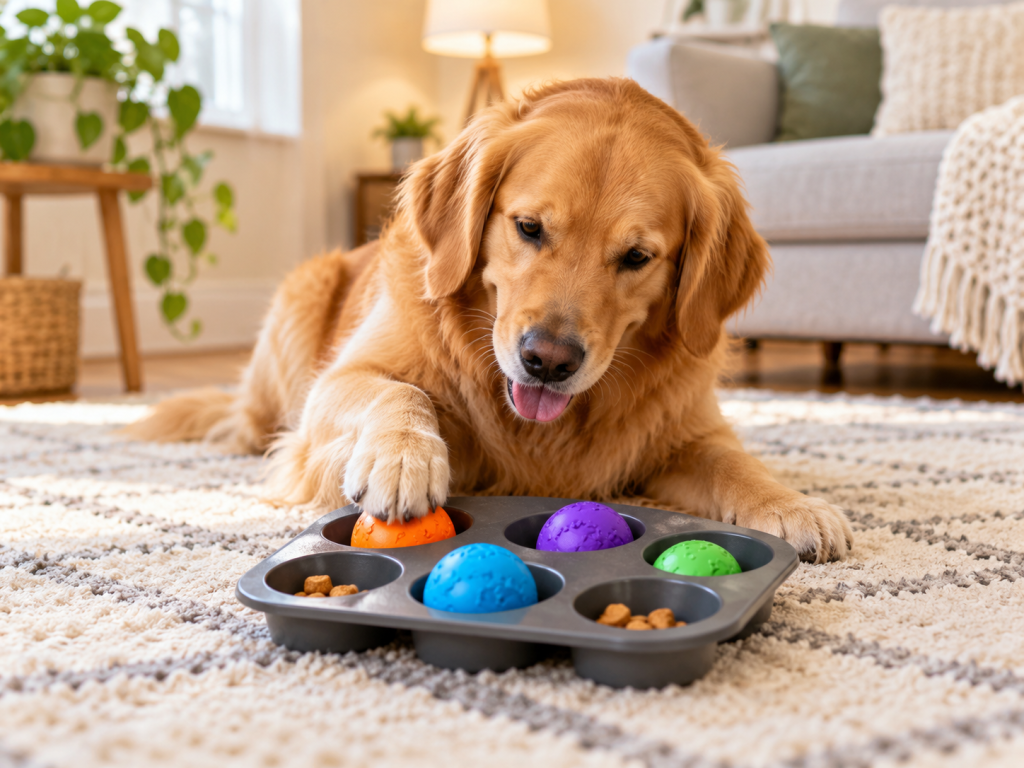
You can also make walks more comfortable by bringing treats your dog loves, choosing open areas with room to turn around, and keeping a little extra distance from blind corners. On especially difficult days, a short sniff walk in a quiet spot or an enrichment game at home may be more helpful than a crowded route.
What to avoid
Try not to make your dog “face their fear” by moving closer and waiting for them to stop reacting. Repeated close exposure can overwhelm a dog and make future reactions stronger. Avoid on-leash greetings with unfamiliar dogs if either dog seems tense, and don’t punish growling or barking; those behaviors are signs that your dog needs help and space.
If your dog has snapped, bitten, redirected onto you, or is difficult to safely control, ask your veterinarian for help finding a qualified, reward-based behavior professional. A veterinarian can also check for pain or other health changes that may affect behavior.
A structured plan can make the next step clearer
If you’d like guided lessons for working on your dog’s behavior, Solve Dog Reactivity AutoWebinar is one program you can explore. It’s designed around dog reactivity and may give you a structured starting point for learning and practice. Every dog is different, so use any course alongside your dog’s comfort level—and seek individual professional help if your dog’s reactions are intense or safety is a concern.
Disclosure: This article contains an affiliate link. If you purchase through it, Pet Peace Plans may earn a commission at no extra cost to you.
Small, calm steps add up
You don’t have to turn every walk into a training session. Start with more space, notice what helps your dog relax, and reward the moments when they can look at a trigger and stay with you. With patience and consistent support, many dogs can learn to handle their surroundings more comfortably. The goal isn’t a perfect walk; it’s helping your dog feel safer, one manageable moment at a time.
For additional guidance, see the VCA overview of desensitization and counterconditioning and the American Veterinary Society of Animal Behavior’s humane dog training resources.